Product description
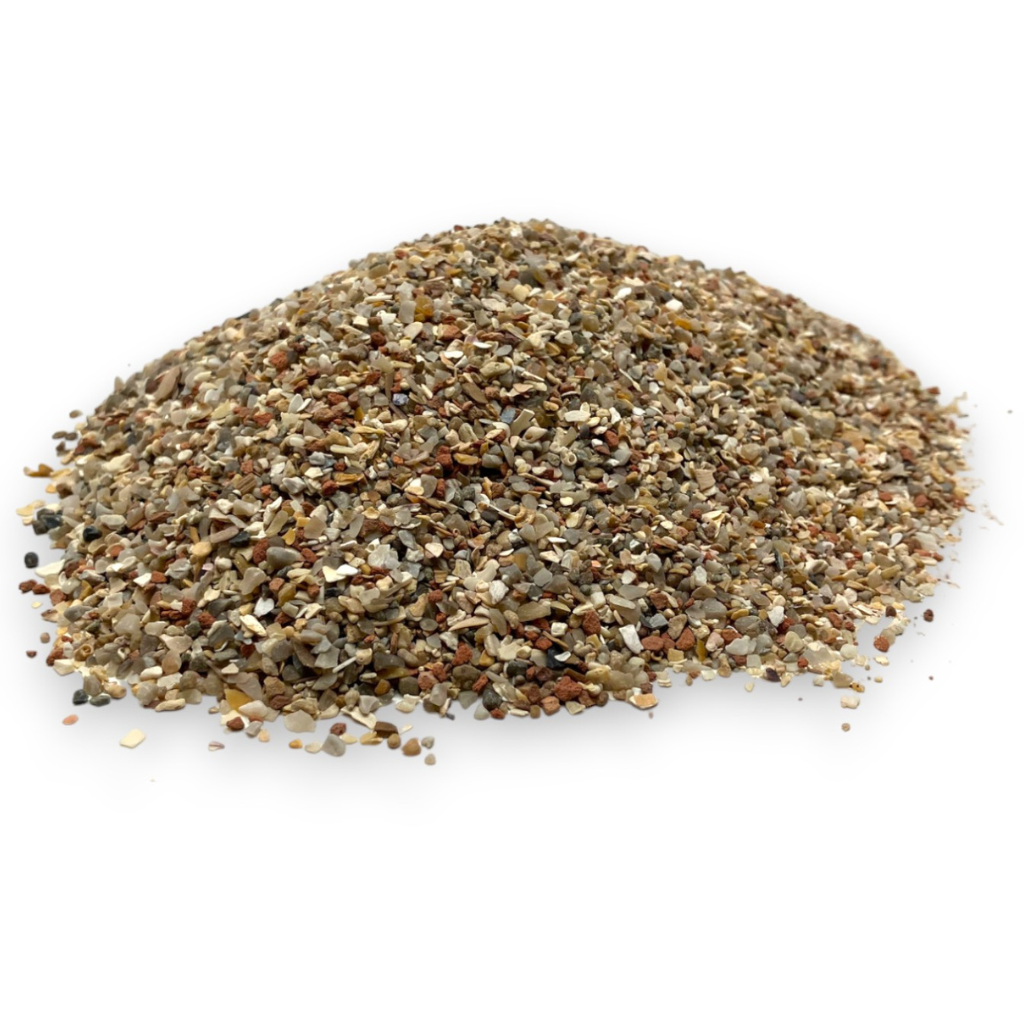
Bird grit in 25 kg bags, for everyday use.
Birds have no teeth. They grind their feed in the gizzard, and hard particles are needed for that. Grit supplies those particles: the bird takes up what it needs, they stay in the gizzard and help grind the seed there.
If a seed-eating bird gets no grit, that grinding is harder work and it gets less out of the same feed. So it is not an extra to offer now and then, but something that should be available all year round.
You offer it separately in a bowl or mix a small amount through the feed. The birds take what they need, so make sure some is always there and refresh it regularly to keep it clean. Fresh drinking water goes with it.
Packed in 25 kg bags. A pallet holds 48 bags.
Product data & specifications
All data for this item, with the barcode of the bag and of the pallet.
| 25 kg | |
|---|---|
| Identification | |
| Item number | 83401901 |
| Barcode bag EAN-13 | 5414770012159 |
| Properties | |
| Contents | 25 kg |
| For | Cage and aviary birds |
| Use | Grit for digestion |
| Net weight per bag | 25 kg |
| Packaging — pallet | |
| Units per pallet | 48 bags |
| Barcode pallet EAN-13 | 5414770012166 |
| Net weight pallet | 1200 kg |
| Gross weight pallet kg | — |
| Height pallet cm | — |
| Width pallet cm | — |
| Length pallet cm | — |
Benefits
Why this belongs with every seed-eating bird.
Indispensable for seed-eaters
Without hard particles in the gizzard, grinding seed is harder work. This is a basic necessity, not an extra.
Birds take what they need
You simply put it alongside; the bird takes what it needs. No weighing, no calculating.
Needed all year round
Not only during breeding. As long as the bird eats seed, it needs grit.
A consumable with steady repeat sales
It runs out and gets reordered. A quiet, recurring line of turnover alongside feed and accessories.
25 kg bag, pallet of 48
The format for breeding operations and dealers. Per bag or per full pallet, with its own barcode on the pallet for your scanning process.
Which mineral when?
Gizzard grit, oyster shell and shell sand each do something different. This is how they complement each other.
1. First the grinding
Every seed-eating bird needs hard particles in its gizzard to grind the seed. Sharp gizzard grit or bird grit should therefore always be available, all year round. Choose the grain to suit the bird: the fine one for canaries and other small seed-eaters, the coarse one for large parakeets and hookbills.
2. Alongside it, the calcium
Oyster shells are not a substitute for gizzard grit but an addition: they dissolve and supply calcium for bones, beak and eggshells. Put them in a separate bowl next to it, and make sure they do not run out, certainly during the breeding season.
3. And on the floor below
Shell sand goes on the floor of the cage or aviary. It absorbs moisture and dirt, and the birds pick up some calcium from it along the way. So it does not replace the first two: it is bedding with a little extra.
| What for | When | |
|---|---|---|
| Sharp gizzard grit — fine | Grinding the seed in the gizzard | Canaries, Gouldian finches, zebra finches and other small seed-eaters |
| Sharp gizzard grit — coarse | Grinding the seed in the gizzard | Large parakeets and hookbills |
| Bird grit | Grit for everyday use | Cage and aviary birds; 25 kg bag for high consumption |
| Oyster shells | Calcium for bones, beak and eggshells | All year round, extra during the breeding season |
| Shell sand | Bedding that absorbs moisture | On the floor of cage and aviary |
Frequently asked questions
What customers ask us most often about this item.
What is bird grit for?
To help grind the feed. Birds have no teeth and use their gizzard; the hard particles do the actual work there.
How do I present it?
Separately in a bowl, or a small amount mixed through the feed. Make sure some is always available and refresh it regularly.
How much should I give?
You do not have to measure anything out. The birds take what they need; just make sure some is always there.
What is the difference from oyster shells?
Oyster shells are calcium and dissolve: they serve above all as a calcium source for bones and eggshells. Grit stays in the gizzard and helps with grinding. Many breeders offer both.
What is the difference from shell sand?
Shell sand is first of all bedding that absorbs moisture, from which the bird also picks up some calcium. Grit you give separately, to be taken up.
How is it delivered?
In 25 kg bags, per bag or per full pallet of 48 bags. The pallet has its own barcode so you can scan it in one go.